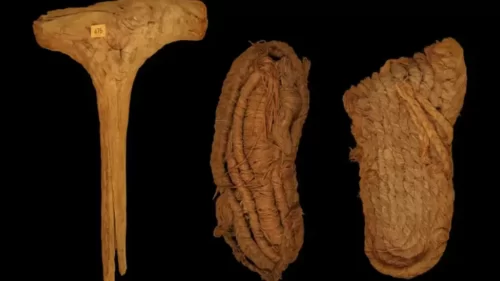
Scientists have identified Europe’s oldest known footwear – a pair of sandals intricately woven from grass, estimated to be approximately 6,000 years old. These ancient artifacts, along with a cache of other objects, were unearthed in a bat cave in Spain that had been plundered by miners during the 19th Century. The remarkable preservation of these items can be attributed to the cave’s low humidity levels and consistent cool winds.
The findings have emerged from a recent comprehensive analysis of the items, shedding new light on prehistoric communities and their technological prowess. María Herrero Otal, co-author of the study, said that these objects constitute the “oldest and best-preserved set of plant fibre materials in southern Europe so far known.” She further explained that the diverse array of technologies and materials used underscores the exceptional skill of these ancient societies.
Cutting-edge dating techniques were instrumental in pushing back the estimated age of the collection by nearly 2,000 years, revealing that some of the objects in the find date back an astounding 9,000 years. Among the items, the meticulously crafted grass sandals take centre stage, showcasing a blend of various grasses intertwined with elements of leather and lime. These exquisite artifacts hail from the Neolithic era, predating the 5,500-year-old leather shoes discovered in an Armenian cave in 2008.
The discovery site, known as the Cueva de los Murciélagos or the Cave of the Bats, is nestled in Andalusia. The cave’s history is as fascinating as its contents, having first been explored in 1831 by a landowner seeking bat guano, a valuable fertilizer component. Not long after, miners delving into the cave stumbled upon a hidden chamber containing a trove of astonishing artifacts. These included partially mummified remains, baskets, wooden tools, wild boar teeth, and a one-of-a-kind golden diadem.
The unearthing of these ancient shoes and accompanying objects offers a unique window into the lives and ingenuity of prehistoric societies that once inhabited this region. The revelation prompts a re-evaluation of our understanding of their technological capabilities and provides invaluable insights into their resourcefulness in utilizing natural materials. This extraordinary find stands as a testament to the enduring human quest for innovation and adaptation in the face of diverse environmental challenges.