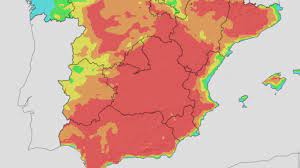
In a recent report, Spain’s state meteorological agency, AEMET, has revealed that this year’s spring season has broken records, becoming the hottest and second driest in the country’s history. The data provided by AEMET highlighted a continuation of the extreme heat that plagued Spain in 2022, a year that marked the hottest in the nation’s recorded history since 1961. Additionally, April 2023 registered the highest temperatures and lowest rainfall ever documented.
According to Rubén Del Campo, spokesperson for AEMET, the average temperature during this year’s spring reached 14.2 degrees Celsius, surpassing the reference period average from 1991 to 2020 by 1.8 degrees Celsius. It also exceeded the previous warmest spring, which occurred in 1997, by 0.3 degrees Celsius.
The scorching heat was accompanied by a significant lack of rainfall, exacerbating Spain’s ongoing drought crisis. Despite some precipitation in the past month, the country’s reservoirs are currently at a concerning 47.4% of their capacity, continuing a downward trend as reported by Spain’s Ecological Transition Ministry.
Del Campo raised alarm bells over the ecological consequences of this heatwave, particularly on the marine life and its reproductive capabilities. He pointed out that surface water temperatures in 2022 were the highest on record since at least 1940. The rising temperatures endanger the marine ecosystem and pose a threat to the reproduction of various species.
The impact of the weather conditions extended beyond marine life. Del Campo emphasised that the high temperatures had severe implications for human health and ecosystems, increasing the likelihood of forest fires. These adverse effects were observed both on coastal regions and inland areas of Spain.
Looking ahead, Del Campo predicted an “extremely hot” summer with a possibility of sporadic rainstorms. However, he noted that the contribution of the El Niño weather phenomenon to the expected high temperatures remained unclear. El Niño is a cyclical warming of the world’s oceans and weather patterns, which experts anticipate will occur later this year.
In response to the dire situation, the Spanish government announced measures worth 2.2 billion euros last month to combat the drought crisis. The funding includes support for urban water reuse initiatives and additional aid for struggling farmers, as Spain is Europe’s leading producer and exporter of fresh fruits and vegetables. In April, the country requested emergency funds from the European Union due to the alarming prospects for this year’s crops.
As Spain grapples with scorching temperatures, water scarcity, and the looming threat to its agriculture, efforts are underway to mitigate the impact on both the environment and the economy. The government’s emergency measures seek to alleviate the immediate challenges while paving the way for a more sustainable and resilient future.