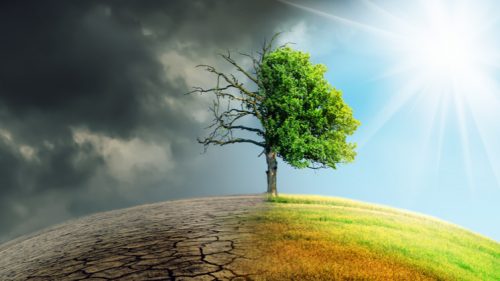
FOR the first time in history, Spain is about to bring a Climate Change Law into effect in a real and determined attempt to halt rising global temperatures, harmful emissions and the death of the world’s oceans, among other crucial planetary emergencies – but are the new criteria enough?
Environmental groups do not think so. But some of their members believe it is at least a start, given that the country has never before had any such legislation, and the provisions within it are heading in the right direction.
The law itself is not what has disappointed ecologists, but the scope of it – although the more optimistic of them believe that it is a framework which can be expanded when its deficiencies become apparent, that it is a legal instrument which can be referred to when lobbying, and that, overall, it is a useful springboard for greater action which has not, hitherto, been available.
Drawn up by Spain’s Commission for Ecological Transition and Demographic Challenge – part of the ministry of the same name, led by deputy president Teresa Ribera, which deals with environmental and energy affairs, and which has been given full jurisdiction over the law-making process, meaning the contents do not have to go through to Parliamentary debate – the new legislation gained 22 votes in favour, five against (from the far-right party Vox), and 10 abstentions, from the right-wing PP and the independent liberal-left Más País.
The year 2050 is often cited by environmental experts – as a time by which increasing earth temperatures need to be kept to within specific limits, a time when countries have pledged to be carbon-neutral, and a time by which there will be more plastic in the sea than fish unless recycling means this material becomes a circular economy and it is no longer dumped.
By the year 2050, Spain wants to be completely carbon-neutral and for its electricity supply to be 100% renewable, with no fossil-fuel use at all – and has left the door open for this to happen earlier if possible.
Other key element of the Law include: no more fossil-fuel mining, zero carbon, emission-free cars and healthier air in towns.
Youth for Climate and Fridays for Future, organisations created through the inspiration of young Swedish activist Greta Thunberg, call the new law ‘disappointing’ and ‘unambitious’, saying they had expected a ‘breath of fresh air’ after the ‘pessimism of the pandemic’ and ‘so many demonstrations and debates’, but that the law-making panel ‘has not listened to science’.
Greenpeace and Ecologists in Action used that uniquely-Spanish-language and highly-descriptive adjective, ‘decaffeinated’, to describe the new law, which they said was ‘fundamental’ and ‘eagerly awaited for a long time’, and question whether its terms will come anywhere near Spain’s fulfilling its commitment to the Paris Agreement.