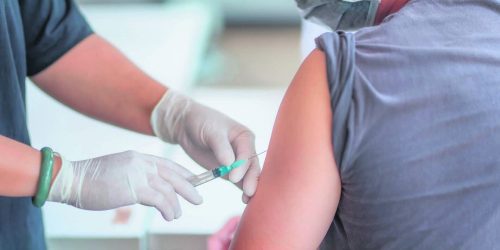
Organisational problems are hampering Spain’s Covid-19 vaccination drive. While the country at one point was administering nearly all of the vaccines that were delivered, this is no longer the case. As more doses have arrived and the Oxford-AstraZeneca vaccine has been integrated into the program, the difference between the number of jabs received and those administered has grown. Healthcare representatives say this is largely due to organizational problems. While the first phase of the vaccination drive targeted staff and residents in care homes, as well as frontline health workers, who are easy to locate and bring together, the next stage has been extended to essential workers under the age of 55 and people 80 years and over, which is presenting logistical challenges.
Although the regions – which are responsible for handling the response to the pandemic and the Covid vaccination drive – have launched this next phase at different speeds, the overall trend is clear. On 2nd February, Spain had administered 94 percent of all Covid doses it had received. This figure fell to 90 percent on 9th February and to 87 percent on 23rd February. Last week, it dropped again to 75 percent. The figures from last week are the most recent as Spain has not yet had time to administer the last shipment of Covid vaccines: 886,880 new doses, the largest delivery to date. It won’t be known until today (Tuesday 2nd March) whether Spain’s vaccination drive is slowing down or picking up after starting the inoculation of the next priority groups.
The difference between the number of doses delivered and those administered is greatest with the AstraZeneca vaccine, which was approved after the jabs from Pfizer and Moderna. The Spanish Health Ministry decided to only use the AstraZeneca vaccine on people between the ages of 18 and 55, due to the lack of clinical evidence of its effectiveness in older demographics. This meant it needed to push forward a new priority group: essential workers, such as teachers, law-enforcement officers and fire-fighters, under the age of 55. On 23rd February (the last day with comparable data), Spain had administered 95.5 percent of the doses from Pfizer, 70.8 percent from Moderna and just 33.7 percent from AstraZeneca.
According to María José García, the spokesperson of the nursing union Satse, with “the easiest part” of the vaccination drive now over, more challenges are starting to appear. With adults who need daily assistance but are not in care homes, and essential workers, it is more complicated. In the first case, for logistical reasons: you have to go to their homes, and in the second, for the sheer volume,” she explains.
But the situation varies greatly across each of Spain’s 17 regions. Although there is a national strategy, some regional governments have decided to overlap different priority groups more than others, or change the order completely. In Valencia, only 12 percent of the AstraZeneca doses have been administered. The region is vaccinating healthcare professionals who are not considered frontline workers, such as physiotherapists and occupational therapists, but has not yet begun inoculating teachers, who make up the largest group of essential workers under 55. A spokesperson from the regional health department said the drive was not behind schedule.
“Regions are being cautious to guarantee the second dose for all those who have been inoculated and this dictates the speed of the vaccination,” they said.
In Spain, 2.4 percent of the population has received the two doses of the Covid vaccine, one of the highest rates in the world. But studies have suggested it may be better to provide more of the population with the first dose as soon as possible.
In countries such as Germany, many people have refused the AstraZeneca vaccine on the basis that it has been found to be less effective in clinical trials. But that does not appear to be a problem in Spain. The state secretary of health said recently that only 2 percent of people offered the Covid vaccine have refused it, and this figure includes individuals who could not take it for medical reasons.
In the next few weeks, more doses are set to arrive in Spain, and this will reveal whether the current organisational problems are continuing. Pablo Alda, from the Spanish Society of Family and Community Medicine, says that while healthcare centres are able to administer the current doses delivered, this will not be the case when the number doubles, which will need to happen in the second and third quarter of the year if the government is to reach the goal of vaccinating 70 percent of the population by the end of summer. For this to be achieved, more than 2.1 million vaccines will need to be administered every week in the next six months. This number, however, is likely to be lower given that the vaccine by Janssen – which only requires one dose – is set to be approved by the European Union between 8th and 12th March. It is not yet known, though, how many doses of this vaccine will be delivered to Spain.