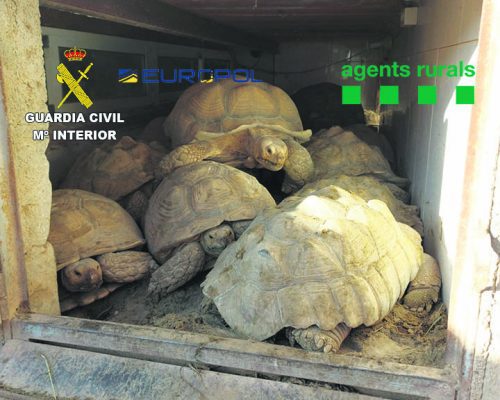
Guardia Civil dismantled two animal trafficking gangs in Spain this week. More than 300 species of endangered reptiles have been seized, as well as weapons from the Second World War, with a valuation of more than €800,000.
The traffickers used “mules” to carry reptile eggs in suitcases in order to transport animals across borders illegally.
The investigation led to the arrest of 21 people who regularly engaged in the illegal breeding, possession, trade and trafficking of protected reptiles, including turtles valued at around €30,000.
The animals came from countries in America, Asia, Africa and Oceania and were imported illegally and introduced into Europe for breeding or sale.
To bypass international conventions for the protection of these endangered species, the detainees made use of falsified documentation or doctored documents of other similar animals from authorized breeders.
The investigation revealed that many of the animals were taken from their natural environment, from places as diverse as Mexico, the Amazon Rainforest, North Africa, Australia, South Africa and the Middle East, and were later illegally introduced into Europe for their subsequent sale or for breeding in captivity.
Guardia Civil also uncovered a network of “mules”, whose main role was to travel to the animals’ countries of origin, and once there, export the species by concealing them – for example, hiding reptile eggs in luggage. In addition, a network of lawbreaking veterinarians has been found that provided the gangs with false documentation, thereby facilitating the “laundering” of animals obtained through illegal trafficking.
Environmental crimes such as exotic animal trafficking has become an incredibly lucrative activity in recent years, involving billions of euro every year. According to a Guardia Civil spokesperson, in terms of organized crime, animal trafficking constitutes, along with human trafficking and drug trafficking, one of the biggest criminal threats at a global level.